Hot Searches: Color Doppler Ultrasound Probe Puncture Rack

Latest Products

Authoritative Expert: Additional Tariffs on Some Imported Medical Devices from the US Will Not Increase Healthcare Costs for the Public
Release time:
2025-03-12 09:42
Regarding the inclusion of some medical devices in China's third round of retaliatory tariffs against the US, some worry about increased medical expenses for the public. Industry experts31told Xinhua reporters that such concerns are completely unnecessary.
In response to the US's further escalation of tariffs, China recently announced a third round of retaliatory tariff measures, a resolute counterattack. Among them, in the second list of countermeasures, China includedXX-ray computed tomography scanners, color Doppler ultrasound diagnostic instruments, orthopedic or fracture appliances, endoscopes, and other medical devices, which will be subject to2019Year12Month15Day12Time01Minute5%or10%unequal tariffs.
In this regard, Jiang Feng, executive vice president of the China Medical Device Industry Association31said in an interview on the day that, according to comprehensive analysis, China's additional import tariffs on the above-mentioned medical devices do not necessarily mean an increase in the cost for hospitals to import and use medical devices, and there is no need to worry about increased medical expenses for the public.
Whether the cost increases depends on whether costs increase. Jiang Feng explained that although the country has raised tariffs on some medical devices imported from the US, China has been lowering import tariffs on related products from European and Japanese countries in recent years. For example, medical devices imported from Germany, Japan, Ireland, Switzerland, and other countries, such asXX-ray computed tomography scanners, color Doppler ultrasound diagnostic instruments, and endoscopes, enjoy lower tax rates. With increases and decreases in tariffs, agents and medical institutions have more choices, and costs will not necessarily increase.
Whether costs rise also depends on whether demand can be met.“Another fact that needs to be clarified is that major hospitals in China currently possess these medical devices, and a medical device can be used for at least5to8years, which is sufficient to meet current medical needs.”Jiang Feng said that even if hospital equipment needs to be replaced, the countermeasures fully consider the needs of hospitals to change import channels.
Reporters learned that the medical industry is a strength of the United States, and the US is China's largest source of medical device imports. In this countermeasure, China has fully considered both the effectiveness of the countermeasures and the substitutability after the tariff increase. The medical devices with increased tariffs are those with relatively strong substitutability. While reducing the comparative advantage of US market products and increasing the comparative advantage of products from Europe and Japan, the deeper meaning lies in creating new market opportunities for domestic medical device enterprises.
“For domestic medical device companies, Sino-US trade friction is both a challenge and an opportunity.”Jiang Feng said that in recent years, China's domestic medical device products have made significant progress, and the gap with foreign companies in product performance and quality has been continuously narrowing. In some high-end equipment, they have reached the level of replacing imports. It is believed that domestic medical device companies will seize the opportunity to continuously move towards the mid-to-high end, and the trend of import substitution will continue.
Reporters learned that China's countermeasures also fully consider actual needs and do not impose additional tariffs on some medical devices with poor substitutability in China and still need to be imported from the US, such as hearing aids, pacemakers, vascular stents, and artificial joints, to minimize the impact on people's lives.
Furthermore, although China's measures fully consider domestic demand and the integrity of the industrial chain, there may still be a few products with poor substitutability under some tariff items that still need to be imported from the US. To reduce the impact on domestic production and people's lives, the State Council's Tariff and Taxation Commission (Tariff Commission) has made it clear that it will actively conduct exclusion work for products subject to additional tariffs from the US, upon application by enterprises.
It is understood that for the first batch of products that can be applied for exclusion, the Tariff Commission office has organized experts to conduct careful and meticulous review and will quickly organize department review to form an exclusion plan; for the second batch of products that can be applied for exclusion,9Month2applications will be accepted starting from the day, and stakeholders significantly affected by trade friction can submit applications online. The method for applying for the third batch of products that can be applied for exclusion will be announced separately.
Jiang Feng said that the association will also actively provide services according to the needs of members and related enterprises, focusing on assisting with the exclusion application for products that cannot be replaced domestically and those related to the public's medical expenses, to minimize the impact of countermeasures and help domestic enterprises achieve better development.

Additional tariffs, medical devices, products, import duties, import substitution, countermeasures by China, exclusions
Contact Us
Room 618, 36 Gaoke Road, Tianhe District, Guangzhou, China
national unified free service hotline:400-020-6788


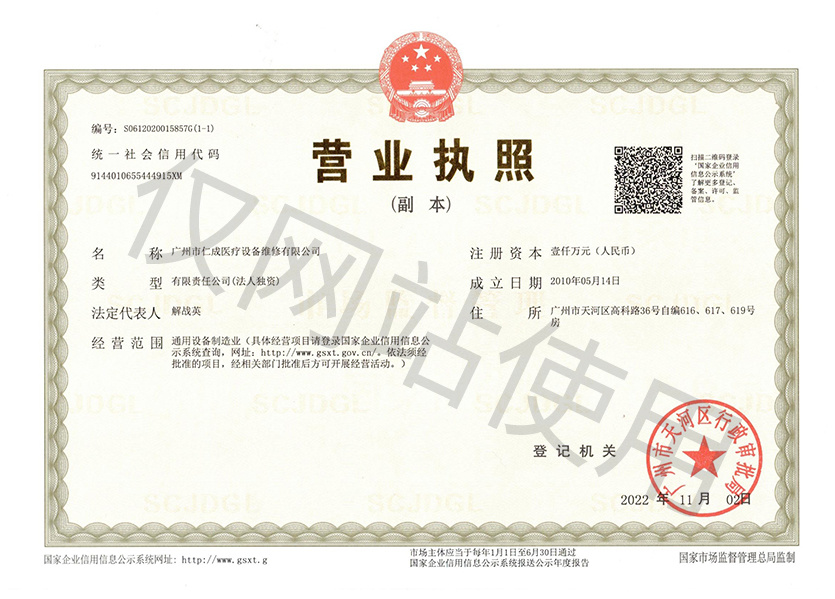
Copyright©2025 All Rights Reserved of Rencheng (Guangzhou) Medical Equipment Maintenance Co., Ltd.