Hot Searches: Color Doppler Ultrasound Probe Puncture Rack

Latest Products

Licensing collaborations (License-In/Out) are an effective path for the internationalization of China's medical devices
Release time:
2025-03-12 09:42
Authorized Cooperation(License): License is a very popular product introduction method in the pharmaceutical field in recent years. It means that the product introducer obtains the commercial rights of research and development, production, and sales in certain specific countries and regions by paying a certain initial payment to the product licensor and agreeing on subsequent milestone payments and future sales commissions.
China's current pharmaceutical industry and10 years ago are very different, the biggest difference being the shift from channel dominance to product dominance, "excellent products" have becomemarketthe focus of pursuit. Reflected in the capital marketisvaluationsystem fromPEG to PEG+Pipeline. Net profit is no longer the only factor supporting valuation. Companies with rich R&D pipelines, even if they are losing money or have no revenue, can still obtain high valuation recognition from the capital market and have access to listing in Hong Kong or the Science and Technology Innovation Board.
According to different introduction directionsauthorized cooperation can be divided into License-in and License-out. The former is that the introducer pays to purchase a license from the licensor, while the latter is that the licensor charges to grant a license to the introducer. In China's new drug R&D field, License-in and License-out have been relatively common in recent years. Relatively speaking, License-out requires that Chinese R&D targets be recognized by international giants, which is more difficult. At present, Chinese pharmaceutical companies have introduced many overseas products through License-in, especially after the systematic application of the License-in model by Remedica, this type of cooperation has become numerous. However, the number of License-out is still relatively small. The following table lists some cases of Chinese product License-out:
Table 1: Cases of License-out of Chinese R&D Drugs

Since authorized cooperation in the pharmaceutical field is very commonthen it is easy to think about the question of whether this model is applicable in the medical device field? Mr. Rand Brenner, CEO of Licensing Consulting Group, believes the answer is yes. His view is:
Medical device R&D companies(especially small companies) have at least two reasons to actively License-out their products to partners:
1. Authorized cooperation allows products to Enter the target market faster, especially for small companies lacking resources. Medical devices are more complex in terms of registration procedures,regulationenvironment, and market development. Small companies, by authorizing cooperation with large companies, can complete product registration and market access faster in the target market. At the same time, large companies are familiar with the regulatory environment, reducing the regulatory risks faced by products after listing. With the Brand endorsement and channel resources of large companies, the speed of product promotion is far beyond the capabilities of small companies.
2. Authorized cooperation is also a way for small companies to protect themselves. If a small company licenses its products to a larger company, the larger company's experience in patents will protect the competitive safety of the products and extend the product life cycle, a capability that small companies usually do not possess. At the same time, large companies, out of economic interests, company reputation, and even stock Price considerations, will devote more commercial resources to increase product sales, and small companies can obtain returns far exceeding those from independently operating products.
In realitylicensors independently operating products and licensing to other companies are not contradictory; both can coexist, adopting different strategies in different markets, different fields, and different periods.
On the other handfrom the perspective of medical device product introducers (large companies with strong financial strength, or R&D companies supported by venture capital), there are also two reasons that motivate them to operate License-in:
1. The traditional product line expansion method for large companies is company acquisition. Currently, the Price of target companies is generally high, resulting in limited or no returns after acquisition. License introduction is a compromise. The product introducer leverages its professional advantages, at a very early stage of the target product, when the Price is not very high, to purchase authorization and participate in subsequent development. This reduces operating costs, improves profit margins, and reduces development risks.
2. Large companies find it difficult to respond quickly to the market. Their internal R&D time for new products is too long, and they face complex problems such as potential conflicts with existing product lines. Medical device innovation is usually solved by individuals or small companies solving engineering problems. Large companies can discover potential products early, get involved in cooperation, not only increase market sensitivity but also help to resolve internal conflicts of interest.
Now back to the Chinese marketwhy is authorized cooperation very common in the pharmaceutical field but rare in the medical device field? This is mainly due to the following reasons:
Insufficient international background of entrepreneurial teams. In recent years, China has seen many returnees with top-level education and work backgrounds starting businesses in the pharmaceutical fieldyears of work and life experience abroad allow them to cooperate smoothly with top international companies. However, Chinese medical device entrepreneurial teams are currently mostly from large domestic medical device companies. Their strengths lie in their familiarity with a certain technology or clinical field, enabling them to quickly launch products with better KPIs than their previous employers and promote and sell them in domestic hospitals, but they lack relevant experience in international authorized cooperation.
Insufficient originality and patent protection of products. Compared with the booming development of new drug research in recent yearsChina's medical devices lack originality, and it is difficult to see products that can shine in the international market. International giants are somewhat "disdainful." In addition, there is a shortage of legal professionals, and patent protection is insufficient, which is crucial for international authorized cooperation.
Insufficient product market space. The market ceiling for most medical devices is relatively lowunlike pharmaceuticals, which often have markets worth tens of billions of dollars. If the market space itself is limited, this product lacks the motivation for international giants to cooperate in authorization.
In summaryif Chinese medical device products want to be licensed to overseas giant companies, the conditions are: the team has an international vision and can cooperate internationally without barriers, and even has a certain reputation abroad; the product has international originality, so that giant companies believe that authorized introduction is more attractive than independent development; and the patent aspect should be rigorous and flawless; the market space is large enough to have sufficient influence on the introducer's own product line.
Although authorized cooperation in Chinese medical devices is still rarethere are still representative cases in the market.
License-in Case Study: Zai Lab introduces Optune®, a Tumor Treating Fields therapy device from Novocure?
Zai LabIn September 2018, Zai Lab licensed the Tumor Treating Fields (TTF) technology, marketed as Optune®, from Novocure. It is currently approved for the treatment of GBM in the United States, Europe, and Japan, and is undergoing clinical trials for various solid tumor indications.
During the process of tumor cell proliferation and divisionmany proteins are involved, some of which are charged. To ensure normal cell division, these charged proteins are regularly distributed within the tumor cells. In vitro and in vivo studies have confirmed that Optune® can generate a low-intensity alternating current electric field within tumor cells, exerting physical force on charged cellular components, thereby interfering with the division and replication process of tumor cells, causing the electrically affected cancer cells to die, and thus delaying and reversing tumor growth.
Optune®, as a novel, non-invasive cancer treatment, has shown remarkable efficacy in the treatment of glioblastoma. The renowned international cancer journal Clinical Cancer Research notes that Tumor Treating Fields is considered the "fourth treatment modality" in addition to surgery, radiotherapy, chemotherapy and immuno-/targeted therapy. Hong Kong is the fourth market to launch this treatment after the United States, Europe, and Japan.
Authorization, product, company, cooperation, market, introduction, China, medical device, tumor
Contact Us
Room 618, 36 Gaoke Road, Tianhe District, Guangzhou, China
national unified free service hotline:400-020-6788


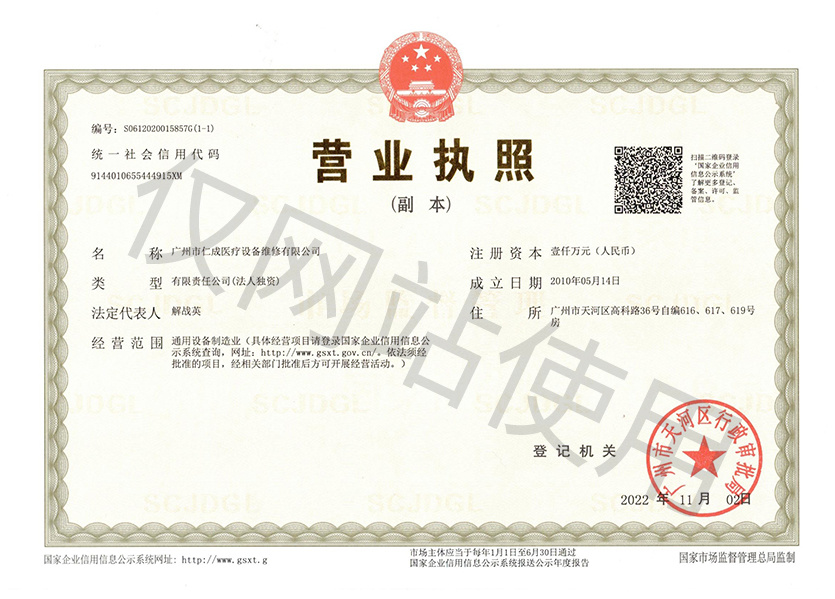
Copyright©2025 All Rights Reserved of Rencheng (Guangzhou) Medical Equipment Maintenance Co., Ltd.