Hot Searches: Color Doppler Ultrasound Probe Puncture Rack

Latest Products

The Emerging Force in Imaging—The Medical Imaging Center
Release time:
2025-03-12 09:39
The US medical imaging diagnostic market has seen rapid development over the past 30 years, driven by both technological advancements and increasing demand.
1) Advancements in medical imaging technology: Over the past 30 years, advanced medical imaging technologies have been developed and applied, with more and more advanced imaging modalities such as MRI, CI, and PET-CT continuously introduced into clinical use, expanding the scope of imaging examinations;
2) Aging population and increased public awareness of prevention create demand: The public and patients are beginning to realize the role of medical imaging examinations in early disease screening, diagnosis, and the importance of early intervention;
3) Increased acceptance and reliance on imaging results by physicians: Clinicians are increasingly using medical imaging as a primary examination and diagnostic aid.

US third-party imaging center diagnostic services operate under two models: remote imaging service centers and physical imaging centers. The US third-party imaging market began after 2000, stemming from the significant increase in imaging examination demand and the mismatch with the number of radiologists, leading to the development of the third-party medical imaging market, resulting in imaging demand maintaining a growth rate of over 30%. US third-party imaging centers are mainly divided into two categories:
1) Remote imaging service centers (Teleradiology): These centers do not have imaging equipment and only provide remote image reading services through cloud service platforms; they are purely service-oriented virtual imaging centers.
2) Physical third-party imaging centers (Outpatient Radiology Imaging Center): These centers have physical imaging equipment and provide both image acquisition and reading services.
Remote imaging service centers (Teleradiology), positioned as a "supplement," are small in scale and have limited profitability. Remote imaging service centers are built upon medical institutions, health examination centers, and physical imaging centers equipped with imaging equipment, providing services for the large amount of image data they generate, connecting the needs of experts and patients. Medical imaging centers typically connect multiple hospitals, and hospitals automatically upload images to the medical imaging center through a cloud network platform, where experts at the imaging center read the images, generate reports, and charge the hospitals a fee for image reading.
The significance of remote imaging service centers lies in "supplementation," not replacement. Virtual Radiologic Corporation (vRad), a leading US company in remote image reading, seized two market pain points when entering the market.
1) Compensating for the lack of specialized image reading capabilities. vRad emphasizes that 75% of its independent radiology physician team are well-trained specialists in specific fields. The incidence of specialized diseases has increased in recent years, and the demand for specialized fields such as breast imaging and lung imaging is rapidly growing. However, small and medium-sized hospitals often lack specialists in these fields and do not have enough patient demand to hire specialists in a particular field, so they choose to outsource specialized image reading to third-party image reading companies such as vRad.
2) Compensating for the lack of image reading capabilities during nights, weekends, and holidays. One of vRad's core competencies is providing 24/7, 365-day image reading services, providing rapid image reading results even during nights and holidays, compensating for the shortage of full-time radiology staff in large hospitals during certain periods, and allowing small hospitals to save on the cost of hiring night-shift radiologists.
From vRad's 15-year history, the relationship between remote image reading and medical institution radiology departments is one of supplementation, not replacement. The aim of remote imaging services in the US is to supplement the shortcomings of existing medical institution services in certain areas. This requires medical institutions themselves to have a certain foundation in radiology to leverage remote services to enhance their diagnostic value. Radiology, as an auxiliary means of medical diagnosis, if medical institutions themselves do not have a certain medical strength, and cannot make a diagnosis based on radiology reports, relying solely on remote imaging to draw conclusions will still be difficult to effectively serve and retain patients. Therefore, for applying remote imaging services to primary medical institutions lacking high-precision imaging equipment and with limited physician imaging capabilities, the US cannot provide a good demonstration effect for China.

vRad Business Model
Remote image reading is only the "tip of the iceberg" of overall imaging services. vRad and Nighthawk are the leading companies in remote image reading in the US, and Nighthawk and vRad were listed on NASDAQ in 2005 and 2007, respectively. In May 2009, vRad was acquired by private equity firm Providence Equity Partners for $294 million and delisted. In October of the same year, vRad acquired Nighthawk for $170 million, and the latter was delisted. After the merger, vRad had 325 affiliated radiologists, more than 75% of whom were well-trained specialists, covering nearly 2,700 medical institutions in over 50 states, with an annual reading volume of over 7 million, making it the largest remote image reading company in the US. In May 2015, the merged company was acquired by Mednax for $500 million. According to information disclosed at the time of acquisition, the merged company's annual revenue in 2014 was $185 million, and based on a 10x EBITDA valuation at the time of acquisition, EBITDA was only $50 million. According to data disclosed by Mednax at the time of the 2015 acquisition, the size of the US medical imaging diagnostic market was $18 billion. According to data released by research firm Transparency Market Research in 2014, the global remote imaging market (including products and services) was approximately $1.7 billion in 2015 and may reach $3.78 billion in 2019. Based on this calculation, the leading companies account for only about 10% of the overall image reading market, which is very small.

Comparison of Business Models of US Remote Image Reading Companies
Homogenized services, lack of economies of scale, and limited profitability. Based on the data of vRad and Nighthawk before delisting, enterprises experienced a period of rapid growth in the early stage, but the growth rate continued to slow down. Nighthawk even experienced a decline in performance before the acquisition. The industry's barriers to entry are relatively low, with many companies providing homogenized services and facing intense competition. As the first company in the United States to provide remote image reading services, Nighthawk had a first-mover advantage, with an operating profit margin reaching 30% in the early stage. As industry competition intensified, the operating profit margin of mature enterprises dropped to 10% or lower, maintaining low-profit operations. While revenue increased rapidly, we did not find a decrease in the company's operating costs. The company has difficulty achieving economies of scale and lacks core competitiveness. Leading companies do not have a significant competitive advantage over start-ups, so the US remote image reading market remains relatively fragmented for a long time. Currently, vRad, relying on the MedNax medical service solution platform, has expanded remote image reading services to data services and image consulting.
Therefore, most companies that simply provide remote image reading services survive on low profit margins and have weak sustained profitability. Obtaining stable, high-value-added film sources and making hospitals or patients willing to pay for purely service-based offerings is the core problem of light-asset remote image reading services.

Nightawk Revenue Chart (2002-2009, millions of USD)

vRad Revenue Chart (2002-2009, thousands of USD)

Nightawk Operating Profit Ratio (2002-2009, %)

Nighthawk Operating Cost Ratio (2002-2009, %)
Medical imaging is highly sought after. Medical imaging services are favored by the government, industry, and investors. Due to the rise of remote image reading and physical third-party imaging centers, the imaging services industry directly addresses the pain points of patients, doctors, and hospitals, and has "great potential." Directly addresses patients' "difficulty in seeing a doctor." Directly addresses doctors' "overburden" and "lack of learning." Directly addresses the "lack of equipment" in primary and grassroots hospitals. Directly addresses the "limited equipment" in secondary and tertiary hospitals. Therefore, it is not only the huge demand for imaging brought about by an aging population and upgraded disease spectrum, but also the imaginable space created by emerging medical imaging services after addressing the pain points of Chinese patients, doctors, and hospitals. With policy support, the medical imaging services industry has entered the fast lane.

Guangzhou Rencheng Medical Medical Imaging Workstation
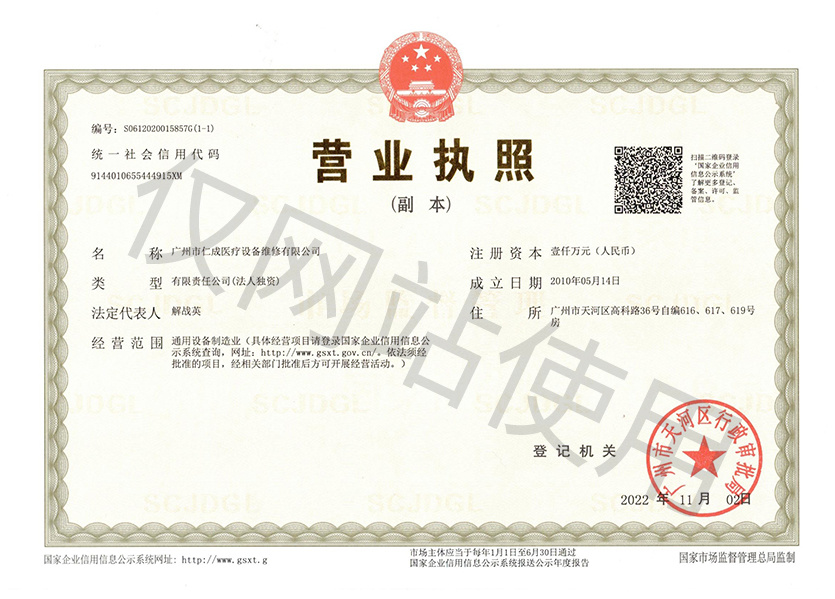
Remote reading of medical images relies on the transmission of information images, enhancing communication with the attending physician, sharing examination results data, and facilitating access to files during referrals. The imaging workstation effectively compensates for this shortcoming, making it convenient for hospitals, doctors, and patients to quickly query examination results, facilitating image reading, file viewing, saving, archiving, and improving the functions of case query, statistics, and management. Guangzhou Rencheng Medical has distinguished itself with more than ten years of experience in medical equipment maintenance, and through cooperation with hospitals, it has clearly understood the needs of doctors. The developed imaging workstation can serve hospitals, doctors, and patients well. Rencheng Imaging Workstation is now recruiting national agents and distributors, and provides 24-hour After-sale Service. Welcome to contact us at any time.
This information belongs to Rencheng Medical. Please indicate the source when reprinting.
Contact Us
Room 618, 36 Gaoke Road, Tianhe District, Guangzhou, China
national unified free service hotline:400-020-6788


Copyright©2025 All Rights Reserved of Rencheng (Guangzhou) Medical Equipment Maintenance Co., Ltd.