Hot Searches: Color Doppler Ultrasound Probe Puncture Rack

scroll down
Latest Products

2019-08-27
In recent years, driven by national medical reform policies and a growing public demand for high-quality medical care, the domestic medical device market has seen significant growth. Data shows that from 2008 to the present, the domestic medical device research and manufacturing sector has achieved a compound annual growth rate of over 20%. High demand has driven an overall improvement in the technological level of domestic medical devices. In the international market, long dominated by developed countries in Europe and America, Chinese leading medical device companies such as Mindray and Lepu Medical have emerged. For example, in the field of high-end ultrasound and radiology diagnostic technologies and products, Chinese medical companies are now competing with GE, Siemens, and Philips.
2019-08-26
Suzhou, August 22, 2019 /PRNewswire/ -- The China Medical Device Innovation and Entrepreneurship Competition is a national event in the medical device field initiated and advocated by the Department of Social Development Science and Technology of the Ministry of Science and Technology of China, and jointly guided and approved by the Department of Social Development Science and Technology and the China Center for Biotechnology Development. Its main purpose is to stimulate the innovation vitality of enterprises and scientific researchers, strengthen the connection between innovation and clinical application and capital, deepen the cooperation among various aspects of the medical device industry, including "production, education, research, application, and supervision", and thus promote the sustainable innovation and development of China's medical device industry. The China Medical Device Innovation and Entrepreneurship Competition was first held in 2018, with a total of 283 innovative medical device projects under research.
Medical device unique identification database nationwide announcement, maximum transparency!
2019-08-23
Unique Device Identification (UDI) is the electronic identity card for medical devices. In the context of the information age, UDI is an advanced means of international medical device regulation, a "universal language" for global traceability of medical devices, signifying that medical devices can be traced and monitored throughout their entire lifecycle, from production and processing to circulation, distribution, and use! On August 9, 2019, the National Medical Products Administration issued a "Notice on the Pilot Program Training for the Unique Identification System of Medical Devices" (hereinafter referred to as the "Notice").
2019-08-23
A series of national-level measures to govern high-value medical consumables have, in addition to squeezing out the "water" in their inflated prices, also created a prime opportunity for manufacturers of high-value medical consumables with truly independent intellectual property rights and core competitiveness to stand out. In the long run, volume-based procurement in the field of high-value medical consumables is expected to accelerate the substitution of domestic products for imported ones. Foreword In recent years, thanks to China's economic development, the increasing demand for people's health, significant improvements in R&D and manufacturing capabilities, and policy benefits such as national support for innovation in domestic medical devices and encouragement of domestic substitution of imports, China has...
2019-08-22
Currently, the innovation capabilities of medical device enterprises in our country are relatively weak. High-end products on the market are more often seen from multinational corporations. Compared to these large companies, our enterprises, doctors, and scientists are still somewhat lacking in innovation capabilities, and product research and development registration is more difficult for us. I believe that an important reason for this result is the difference in innovative thinking. In the process of product research and development, functionality research and development comes first. Next, it needs to undergo tests of compliance, reliability, ease of use, and mass production. The first is compliance; there are more than 1600 national and industry standards for medical devices, and innovation is frequent
Analysis of the Current Status of Personalized Medical Device Technology Review and Regulation
2019-08-21
Meeting Personalized Needs: Focusing on Customization In recent years, additive manufacturing technology has developed rapidly, and its characteristics of precise processing, low cost, high degree of automation, and customizable production have gradually become apparent. Unlike the mass-produced nature of subtractive manufacturing technology, customized production perfectly matches the needs of precision medicine in the medical field. Domestic and international industries are increasingly calling for the use of personalized medical devices to replace existing standardized products, which has gradually become a consensus in the medical community. In the face of this situation, both domestic and international regulatory authorities and academia have conducted explorations and reflections. The U.S. FDA has issued guidelines on personalized additive manufacturing medical devices, and Europe has also conducted relevant
2019-08-19
At the "Healthy China Construction in the 5G Era" summit forum, Jiang Deyuan, an inspector from the Medical Device Registration Office of the National Medical Products Administration, revealed that the "Medical Device Supervision and Administration Regulations" is expected to be promulgated this year. In recent years, the five tasks of the Medical Device Registration Office of the National Medical Products Administration in continuously optimizing its operation mechanism are: First, the issuance of the "Decision on Adjusting the Approval Procedures for Certain Medical Device Administrative Approval Matters", which centralizes the approval procedures for continued registration and registration changes to the Medical Device Review and Evaluation Center, reducing the number of steps and improving efficiency. Second, the revision of the "Catalog of Medical Devices Exempt from Clinical Trials". So far, there are 1
Contact Us
Room 618, 36 Gaoke Road, Tianhe District, Guangzhou, China
national unified free service hotline:400-020-6788


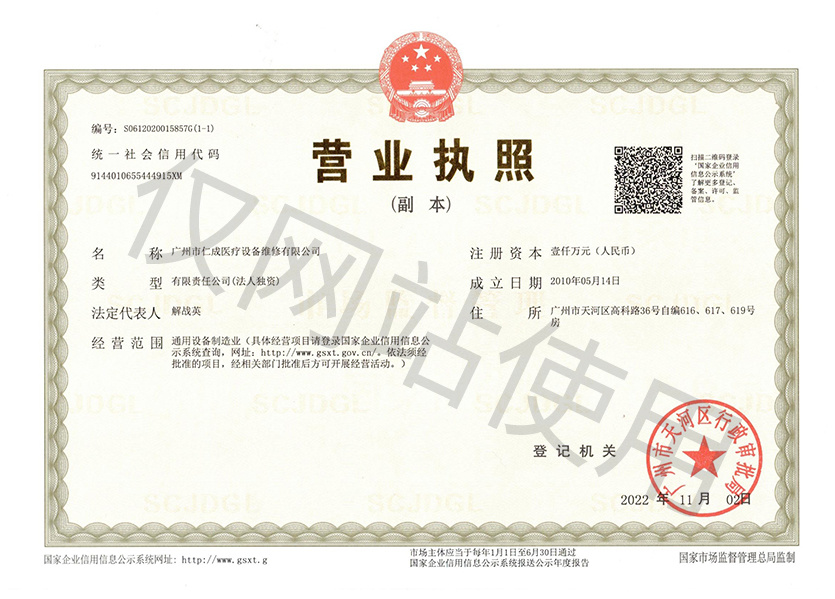
Copyright©2025 All Rights Reserved of Rencheng (Guangzhou) Medical Equipment Maintenance Co., Ltd.