Hot Searches: Color Doppler Ultrasound Probe Puncture Rack

scroll down
Latest Products

The medical industry is undergoing a crackdown, with strict scrutiny of account books, invoices, and vouchers...
Release time:
2025-03-12 09:41
The medical industry is beginning to be rectified, with strict checks on account books, bills, vouchers, documents, and other materials, and verification of bank information related to pricing practices.
Check consumablesBiddingAnd procurement
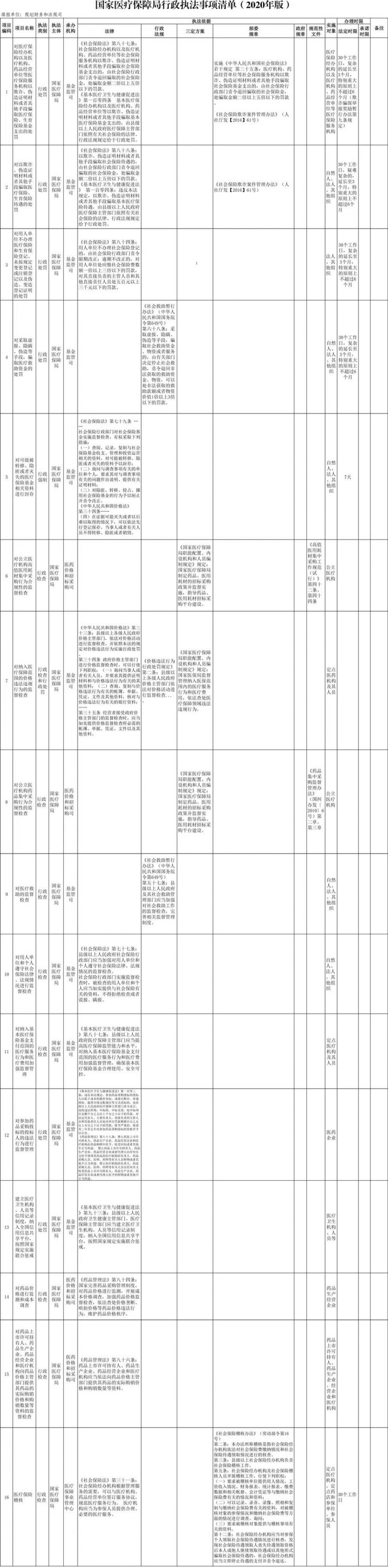
Recently, the National Healthcare Security Administration released the Administrative Enforcement Matters List (2020 Edition). The content covers 16 items, involving medical institutions, various enterprises, and individuals, covering areas such as the use and procurement of high-value consumables.
Items 6 and 8 of the 2020 list indicate that there will be supervisory checks on the compliance of centralized procurement practices for high-value medical consumables in public medical institutions; for public medical institutionsDrugsSupervise and check the compliance of centralized procurement practices.
The law enforcement basis for these two measures comes from the "Regulations on the Function Allocation, Internal Institutions, and Personnel Staffing of the National Healthcare Security Administration," which clarifies that the National Healthcare Security Administration formulates and supervises the implementation of bidding and procurement policies for drugs and medical consumables, and guides the construction of bidding and procurement platforms for drugs and medical consumables.
The actual purchase and sales prices and quantities are also areas of strict scrutiny.
The list indicates that there will be supervisory checks on the provision of data on the actual purchase and sales prices and quantities of drugs by drug marketing authorization holders, drug production enterprises, drug sales enterprises, and medical institutions to the drug price management departments; relevant responsible persons must provide their actual purchase and sales prices and quantities to the inspection departments.
Check institutions' documents, account books, and bills
The National Healthcare Security Administration pointed out in the "2019 Medical Security Development Statistics Bulletin" that various levels of medical insurance departments have conducted on-site inspections of designatedPharmaceuticalInstitutions totaling 815,000, and 264,000 pharmaceutical institutions were investigated for illegal, irregular, and breach-of-contract activities, among which 6,730 had their medical insurance agreements terminated, 6,638 were administratively punished, and 357 were transferred to judicial authorities.
It is understood that the vouchers and materials of medical institutions are the focus of the inspection.
The 2020 list indicates that during price supervision inspections, the relevant parties or personnel will be questioned, and they will be required to provide supporting materials and other materials related to price violations;
At the same time, the account books, bills, vouchers, documents, and other materials related to price violations will be queried and copied, and the bank information related to price violations will be verified;
Medical insurance operating institutions, medical institutions, pharmaceutical sales units, and other medical insurance service institutions that defraud, forge certificates, or use other means to obtain medical insurance and maternity insurance funds will be punished.
The social insurance administrative department will order the return of the defrauded social insurance funds and impose a fine of two to five times the defrauded amount.
For personnel involved in illegal incidents, a credit record system for medical and health institutions and personnel will be established, included in the national credit information sharing platform, and joint punishment will be implemented in accordance with national regulations.
Check for abnormal consumable usage
Under the national framework for the governance of consumables, various provinces have introduced rules for the use of consumables. Consumable usage is a key focus of supervision; excessive usage of a certain type of consumable leads to higher reimbursement rates in medical insurance. Values above the normal range are considered abnormal.
On April 23, Hebei Provincial Medical Insurance Bureau issued a document "Notice on Establishing an Early Warning and Reminder System for Abnormal Growth of Medical Expense Indicators for Designated Medical Institutions," and the provincial medical insurance bureau monitors various indicators of medical expenses in real time through the medical supervision big data analysis system.
The monitoring will focus on the particularly abnormal usage (total quantity, total amount, daily usage) of medical consumables and diagnostic and treatment items in individual cases; and the significantly higher usage rate than the agreed usage rate in similar medical institutions at the same level, for drugs and diagnostic and treatment items outside the disease category;
The particularly abnormal proportions of drugs, medical consumables, and diagnostic and treatment items among similar medical institutions at the same level and for the same disease (e.g., examination fees accounting for more than 85%).
It can be seen that the procurement or settlement price of medical consumables will be a key focus of the inspection.
CheckMedical devicesDistribution channels
It is worth noting that the distribution channels of medical device companies are also a key focus.
On April 14, the National Medical Products Administration (NMPA) issued the "Notice on Strengthening Supervision and Inspection of Aseptic and Implantable Medical Devices" (hereinafter referred to as the "Notice"), which clearly states that supervision and inspection will be conducted on key medical device companies, key products, and key links.
In the distribution channels, the focus is on checking enterprisesEnterpriseswith multiple batches in the same year, multiple years of the same product, or multiple years of multiple products failing inspections; enterprises with serious defects or incomplete remediation in previous supervision and inspection or flying inspections; enterprises with inadequate training, incomplete self-checks, failure to submit self-check reports on time, or self-check reports that are perfunctory; and other enterprises that may have serious safety hazards and require key attention.
Specifically include:
(1) Whether they have engaged in the operation (online sales) of medical devices without a license (record);
(2) Whether they operate (online sales) medical devices without a registration certificate or record certificate;
(3) Whether the purchase and sales channels are legal;
(4) Whether the incoming goods inspection records and sales records are true and complete, and whether the relevant information can be traced;
(5) Whether they operate medical devices without qualified proof documents, or expired, invalid, or obsolete medical devices;
(6) Whether the transportation and storage conditions meet the requirements indicated on the label and instructions, and whether medical devices requiring cold chain management are equipped with appropriate facilities and equipment;
(7) Whether they fulfill their obligations related to medical device adverse event monitoring.
For key products, according to the Notice, in addition to a comprehensive inspection of aseptic implantable medical devices, the following will be a key focus: high-value medical consumables; medical devices used in the prevention and control of the COVID-19 epidemic, especially products with large quantities and wide coverage such as medical protective clothing and medical masks; and disposable infusion devices, etc.
Attached original document:
Medical industry, account verification, reconciliation
Contact Us
Room 618, 36 Gaoke Road, Tianhe District, Guangzhou, China
national unified free service hotline:400-020-6788


Copyright©2025 All Rights Reserved of Rencheng (Guangzhou) Medical Equipment Maintenance Co., Ltd.