Hot Searches: Color Doppler Ultrasound Probe Puncture Rack

Latest Products

Third-party medical device logistics companies urgently need regulation
Release time:
2025-03-12 09:43
With the rapid development of the medical device industry and the implementation of the "two-invoice system" for medical consumables, third-party logistics companies for medical devices have emerged. These companies specialize in providing storage and delivery services for medical device manufacturers and businesses. Because they adapt to the current state of the medical device industry and comply with the "two-invoice system" policy, they have become a new ecosystem in the industry and are gradually growing stronger.
However, thelawsand regulations
Administrative Licenses to Know
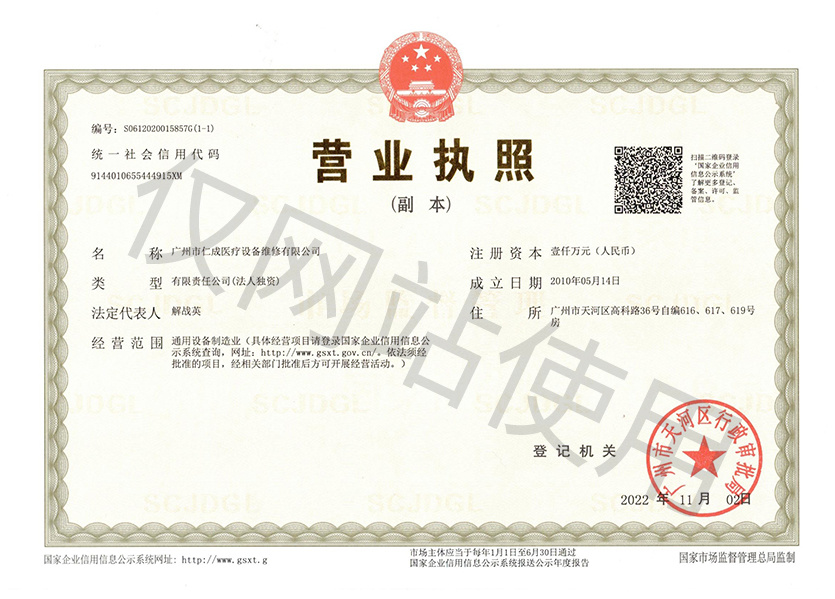
In addition to obtaining a Business License, what other administrative licenses should a third-party medical device logistics company obtain? I believe that at least the following aspects should be included.
First, third-party medical device logistics companies should obtain a Road Transportation License.
By examining the provisions of Article 2 of the Road Transport Regulations (2019 revision) on "road transport operations" and "road transport-related businesses," as well as Article 119 of the Road Traffic Safety Law on the definition of "roads" and Article 2 of the Regulations on Road Freight Transport and Station Management on the definition of "road freight transport operations" and "road freight transport station (yard) operations," it can be found that third-party medical device logistics companies meet the nature of road freight transport operations; and according to Article 24 of the Road Transport Regulations, third-party logistics companies providing product delivery services for other medical device manufacturing and operating companies, if the total weight of the transport vehicles is over 4500 kilograms, should obtain a Road Transport License.
At the same time, according to Article 2, paragraph 4, of the Regulations on Road Freight Transport and Station Management, "Road freight transport stations (yards) (hereinafter referred to as freight stations) refer to comprehensive freight stations (yards), less-than-truckload freight stations, container transfer stations, and logistics centers, etc., which rely on site facilities to provide paid services to the public and have functions such as warehousing, storage, loading, information services, loading and unloading, and inventory management." I believe that the warehouses of third-party logistics companies that provide storage services to other medical device manufacturing and operating enterprises meet the definition of road freight stations; and the storage services they provide meet the provisions of Articles 9 and 10 of the Regulations on Road Freight Transport and Station Management.
In addition, it should be clarified that the Road Transport License that third-party medical device logistics companies need to obtain is a prerequisite for obtaining other administrative licenses for third-party medical device logistics transportation. This is clearly stipulated in Article 36 of the Measures for the Supervision and Administration of Medical Device Operation (hereinafter referred to as the "Measures") and Article 31, paragraph 1, item 1, of the Quality Management Specifications for Medical Device Operation. The "storage and distribution conditions" and "conditions of modern logistics storage and transportation services" referred to therein both include obtaining a Road Transport License.
In summary, third-party logistics companies that provide storage and delivery services to other medical device manufacturing and operating enterprises must obtain a Road Transport License.
Second, third-party medical device logistics companies should obtain a Medical Device Business License.
Article 62 of the Measures defines medical device operation as "the act of providing medical device products through purchase and sale, including purchasing, acceptance, storage, sales, transportation, and After-sale Service." From this, it can be seen that the storage and distribution of medical devices also belong to medical device operation. Article 36 of the Measures also stipulates: "Medical device operating enterprises that provide storage and delivery services for other medical device manufacturing and operating enterprises shall sign a written agreement with the commissioning party, clearly defining the rights and obligations of both parties, and shall have equipment and facilities that are commensurate with the product storage and distribution conditions and scale, and shall have a computer information management platform and technical means that can carry out real-time electronic data exchange with the commissioning party and achieve traceability of the entire product operation process." This fully proves that the provider of storage and distribution services to other medical device manufacturing and operating enterprises should also be a medical device operating enterprise.
In summary, third-party medical device logistics companies should also obtain a Medical Device Business License.
Legal Responsibilities Should Be Clarified
First, the Medical Device Business License of third-party medical device logistics companies is not standardized. The original State Food andDrugAdministration issued the "Notice on the Implementation of the Measures for the Supervision and Administration of Medical Device Production and the Measures for the Supervision and Administration of Medical Device Operation" (Food and Drug Administration [2014] No. 143) on August 1, 2014. Appendix 15 of the notice, "Application Form for Medical Device Business License (Sample Form)", includes "wholesale, retail, and both wholesale and retail" as business methods and "sales of medical devices, providing storage and delivery services for other manufacturing and operating enterprises" as business models. However, Appendix 14, "Medical Device Business License" (sample) and certificate Specification, does not have a business model item. Therefore, "providing storage and delivery services for other manufacturing and operating enterprises" cannot be reflected on the Medical Device Business License. Currently, this can only be reflected in the business method column.
Second, the acceptance and supervision of third-party medical device logistics companies lack legal basis. Currently, the national drug regulatory authorities have not yet issued relevant documents or regulations on the market access conditions for third-party medical device logistics companies. The current market access conditions for third-party medical device logistics companies are formulated by the drug regulatory departments of various provinces (autonomous regions and municipalities). For example, Shanghai, Beijing, Guangdong, Jiangxi, Hunan, and Fujian have already issued relevant access conditions. However, due to the lack of uniform and authoritative standards, the access conditions in different places vary in strictness. Therefore, the supervision of third-party medical device logistics companies can only apply the regulations, rules, or normative documents for the supervision of ordinary medical device operating enterprises.
Third, the issue of legal responsibility allocation. According to Article 40 of the Quality Management Specifications for Medical Device Operation, "When an enterprise entrusts a medical device operating enterprise to provide storage and distribution services for other medical device manufacturing and operating enterprises, the commissioning party shall bear the responsibility for quality management. The commissioning party shall sign a legally binding written agreement with the entrusted party, clarifying the legal responsibilities and obligations of both parties, and shall assume and fulfill the corresponding quality responsibilities and obligations according to the agreement." The commissioning party shall bear the quality management responsibility for the medical devices. However, in actual operation, many commissioning parties usually do not directly contact the products but only bear the obligation to review the qualification certificate materials of the primary enterprise and primary products, thus resulting in the separation of certificates and goods. The quality management work such as product warehousing acceptance, in-warehouse storage, and outbound distribution is usually completed by the entrusted party. For quality problems arising from this, laws and regulations do not clearly define the attribution of legal responsibility, and it can only be determined through agreements signed by both parties, which may inevitably lead to disputes and disagreements.
Fourth, the issue of different requirements for medical device warehouses and logistics company warehouses. ThePharmaceuticalIndustrial Warehousing Engineering Design Code (GB 51073-2014) and the Logistics Building Design Code (GB 51157-2016) have different requirements formedical devicewarehouses and logisticscompaniesWarehouse design requirements vary greatly. Those that meet the requirements of pharmaceutical warehousing do not necessarily meet the requirements of logistics building design codes. For example, GB 51073-2014, 5.1.3 stipulates that the minimum clear height of a single-story warehouse should not be less than 4.2m; the minimum clear height of the first floor of a multi-story warehouse should not be less than 4.2m, and the minimum clear height of the second and subsequent floors should not be less than 3.5m. However, GB 51157-2016, 9.3 stipulates that the minimum indoor clear height of storage-type logistics buildings should be ≥5.5m for ground-level operations, ≤7.0m for general shelving, and ≥9.0m for high-bay shelving. When constructing third-party logistics warehouses for medical devices, which standard should be followed needs to be clarified.
Company, medical devices, logistics, operation, third-party, road, storage, regulations, transportation
Next Page
Contact Us
Room 618, 36 Gaoke Road, Tianhe District, Guangzhou, China
national unified free service hotline:400-020-6788


Copyright©2025 All Rights Reserved of Rencheng (Guangzhou) Medical Equipment Maintenance Co., Ltd.