Hot Searches: Color Doppler Ultrasound Probe Puncture Rack

Latest Products

Domestication of imaging equipment: This is the first shot!
Release time:
2025-03-12 09:39
Currently, the domestic DR Brands have formed three major Brands: Anjian Technology, Wandong Medical, and United Imaging. These three major Brands currently have the largest user base in China's vast county-level medical market.
"80%, or even 90%, of equipment such as CT, ultrasound, and DR is monopolized by multinational companies. The three GPS companies alone account for over 70% of the market share." In 2010, Zheng Quanlu, then director of the National Engineering Technology Research Center for Digital Medical Imaging Equipment of Dongsoft Group, told the media. Ten years later, this situation remains unchanged. Due to technological monopolies, multinational companies have considerable control over product pricing.
The development of the medical equipment industry is related to people's livelihood. Promoting the development of China's medical equipment industry and accelerating domestic substitution are of great significance to ensuring people's livelihood and national health. Therefore, how to create high-quality products, exquisite products, and high-tech, high-performance domestically manufactured equipment is particularly important.
Among thousands of medical equipment categories, the DR field is a miracle. In just a few years, it has broken through the imaging monopoly market, fully achieved domestic substitution, and the development of both upstream and downstream supply chain enterprises is relatively mature. Almost all equipment providers, from detectors and high voltage to X-ray tubes, are available.Currently, the domestic DR Brands have formed three major Brands: Anjian Technology, Wandong Medical, and United Imaging. These three major Brands currently have the largest user base in China's vast county-level medical market.
01影像设备国产化:DRFiring the First Shot
Over the past 20 years, China's medical device market has been fully integrated with the global market, and Chinese companies have developed rapidly, catching up quickly. However, because domestic medical equipment manufacturers have a shorter history, most manufacturers are still in the growth stage. Therefore, compared with imported manufacturers, domestic manufacturers still have many areas that are not mature enough, such as in high-end technology, materials, quality control, market marketing, and service systems.
Promoting the domestic production of medical devices is not only a matter for the medical industry but also relates to the revitalization of the national real economy and the protection of national information security. In the last five years, the growth rate of China's medical device market has been far higher than the international level, consistently maintaining above 15%, 10 percentage points higher than the global medical device market. Features such as better local services, high cost-effectiveness, and policy support and guidance have helped domestic companies gradually gain a certain advantage.
Domestic substitution of imports is an inevitable trend. Whether it is heart stents, monitors, biochemical diagnostics, DR, pleura, heart occluders, ultrasound, endoscopes, chemiluminescence, blood cell analysis, CT, MRI, or even high-end PET systems, there are many domestically produced devices. If among these medical devices, there is one that has almost completely replaced imports, it would definitely be DR.The domestic DR market has passed the early stage and has entered the mature stage. Domestic manufacturers are flourishing in the market. As of 2019, the Chinese DR market has achieved over 70% market share and continues to develop rapidly.

In domestic hospitals, DR has become the most commonly used diagnostic tool in radiology departments, playing an important role in diagnosing and treating diseases. Compared with the expensive examination fees of CT and MRI, DR is very popular. According to data published by medical procurement statistics, it involves 5,676 units in 16 categories of medical institutions across 31 provinces, autonomous regions, and municipalities; 80 Brand manufacturers; and a procurement quantity of 11,426 units/sets.
Imaging equipment companies represented by Wandong Medical, Anjian Technology, and United Imaging have achieved widespread popularization and application of DR in China through innovative technology, manufacturing, and cost advantages, bringing DR to countless towns and villages across China. DR has become the imagingequipment with the highest penetration rate, and even the most remote people can enjoy more accurate and accessible medical diagnostic services.
As the "ancestor" of domestic multi-functional dynamic DR, Anjian Technology has not stopped exploring technology after successfully developing China's first dynamic DR.Following the first generation of multi-functional dynamic DR in 2014, Anjian Technology successfully developed the DTP570 series of dynamic flat-panel DR products with independent intellectual property rights in 2016, becoming the only domestic manufacturer that masters dynamic flat-panel detector technology; in 2018, Anjian Technology's dynamic DR global installations reached 3,000, with dynamic DR applications in nearly 40 countries and regions worldwide; in 2019, Anjian Technology successfully launched its fourth-generation bed-type dynamic DR product, which has reached international standards in both component technology and overall design, becoming a highly competitive imaging product in the high-end medical market.

Wandong Medical is one of the earliest enterprises in China to develop and manufacture medical X-ray machines. Its business covers the manufacturing and sales of medical imaging equipment and medical imaging diagnostic services. After Wandong Company went public, Wandong Medical changed hands several times. In 2015, it was transferred from China Resources to Yuwell Technology, and then acquired by Midea. Despite several twists and turns, Wandong Medical's sales volume still ranks first.
In 2020, after the baptism of the epidemic, in addition to the well-known Mindray ventilators, Mindray's DR DigiEye280 and DR DigiEye680 series have also become widely known. In terms of sales, Mindray ranked third with a 7.97% market share. Although DR is not Mindray Medical's main business, it still ranks among the top ten in this market share battle of DR products, worthy of its reputation as the "number one".
United Imaging ranks sixth with a 6.71% market share and is a rising star that cannot be ignored. In the Chinese market, the competition between United Imaging and GPS has gradually escalated. Its independently developed high-end products such as MRI and CT have gradually been recognized by the domestic market. Its DR development has also been very rapid, achieving annual sales exceeding 700 units in just a few years.
02
02 Domestic Substitution Boom, Who Will Be the Next Anchor?
Among thousands of medical equipment categories, national Brands have emerged like mushrooms after a spring rain. This is primarily due to the domestic substitution policy boom in recent years. Through the ten years of supporting domestic development policies from 2011 to 2021, various national ministries and commissions have formulated a series of policies, projects, and measures for the development of the medical and health industry, promoting the domestic development of the medical device and medical equipment industry, making the national manufacturing equipment industry gradually stronger, and the domestic equipment substitution market ushering in a golden decade of development.

Summary of National Policies Supporting Domestic Development from 2011 to 2021
In December 2011, the Ministry of Science and Technology formulated the "Twelfth Five-Year Plan for the Medical Device Science and Technology Industry," which clearly defined the development technology routes for key products such as superconducting nuclear magnetic resonance, multi-slice spiral CT, and high-performance ultrasound, to change the situation of relying on imports of high-end products, poor reliability, and weak independent innovation capabilities in China. It focused on breaking through the bottlenecks in the domestic production of high-end equipment and core components and supporting and promoting the development of the domestic medical imaging equipment industry. A year later, it launched the "Key Project for Medical Devices," focusing on the development of major strategic products such as digital X-ray machines, ultrasound, magnetic resonance imaging, and PET-CT.
To accelerate the popularization and promotion of these innovative medical devices, at the policy level, the national and local governments have continuously promoted "import substitution." In 2011, the Ministry of Science and Technology and the Ministry of Health jointly launched the "Ten Thousand, Hundred, Thousand Project" for domestically produced innovative medical devices in 10 provinces (cities) across the country.Within 100 districts (counties) in 10 provinces and cities, 1,000 pilot medical institutions were selected to apply more than 10,000 innovative medical devices. This provided a very favorable competitive environment for domestic equipment manufacturers.
Starting in 2014, the former National Health and Family Planning Commission entrusted the China Medical Equipment Association to organize the selection of excellent domestically produced equipment, establishing a catalog of excellent domestically produced medical equipment. The sixth batch of selection results has been announced, with a total of over 1,000 domestically produced medical devices selected, effectively improving the quality of medical equipment manufacturing and promoting the vigorous development of the domestic medical market.
In May 2015, China's "Made in 2025" plan, issued by the State Council, identified high-performance medical equipment as one of the top ten key development areas. It organized and implemented a series of innovation and industrialization projects and major projects, including high-end diagnostic equipment, and clearly stated that by 2025, the market share of high-end equipment with independent intellectual property rights in related fields would be significantly increased, accelerating the domestication and innovative transformation of China's medical device sector.
In March of the same year, the Ministry of Science and Technology issued the "Implementation Plan for Key Special Projects on Digital Diagnostic Equipment (Draft for Comments)", making key deployments for domestically produced digital diagnostic equipment. Focusing on ten major strategic products such as new magnetic resonance imaging systems, new computed tomography, large-scale radiotherapy equipment, and surgical robots, it strengthened the research and development of core components and key technologies, broke through a number of leading cutting-edge technologies, and promoted the "digitalization, networking, and intelligence" development of the medical device industry.
In October 2016, the Central Committee of the Communist Party of China and the State Council issued the "Healthy China 2030" Planning Outline, which clearly stated the need to strengthen the innovation capacity of high-end medical equipment, accelerate the transformation and upgrading of medical devices, and improve the international competitiveness of medical diagnostic equipment and medical materials with independent intellectual property rights. It also proposed the goal of achieving full alignment of medical device quality standards with international standards by 2030.
Advanced medical devices are an important foundation for the construction of a health security system and a transformative force leading the transformation of medical models. They have high strategic importance, driving force, and growth potential. The "13th Five-Year Plan for the Development of National Strategic Emerging Industries" and the "13th Five-Year Plan for Technological Innovation in Medical Devices" clearly strengthen the research and development of innovative medical devices, promote quality improvement, reduce import dependence, and lower medical costs. In terms of medical device procurement, the National Health Commission proposed to strictly implement the Government Procurement Law to ensure that government funds prioritize the procurement of domestically produced medical equipment.
After nearly 20 years of efforts, especially since the "Twelfth Five-Year Plan", with the introduction of a series of favorable policies, a large number of medical device companies have risen strongly and begun to enter the domestic mid-to-high-end market, thus driving the entire industry to gradually move towards the upstream of the mid-to-high-end value chain, and many product lines have achieved import substitution.
X-ray machines, ultrasound, and biochemical analyzers, the three new basic pieces of equipment at the grassroots level, have undergone comprehensive technological upgrades. High-end products such as MRI, color ultrasound, CT, and PET-CT have successfully achieved domestic production. The average procurement cost of domestically produced medical devices is more than 30% cheaper than imported brands, providing important support for the equipment configuration and service upgrades of medical institutions and providing strong support for the smooth progress of medical reform in China.
In recent years, in order to increase the process of domestic substitution of medical equipment, medical reform policies have been continuously promoted. In April 2018, the eight departments including the National Development and Reform Commission issued the "Opinions on Promoting the Demonstration Application of the First Set of Major Technical Equipment," in which 23 types of medical equipment can enjoy the support of the "first set" promotion and application policy, including DR, MRI, CT, PET-CT, PET/MR, DSA, color ultrasound, and electronic endoscopes.
In April 2019, the National Health Commission issued the "2018-2020 Planning for the Configuration of Large Medical Equipment," which clearly states that the configuration of large medical equipment should be determined based on the functional positioning and clinical service needs of the hospital. Secondary and below hospitals and non-clinical emergency hospitals should be guided to prioritize the configuration of domestically produced medical equipment.
In March 2020, the Ministry of Science and Technology issued the "Overall Plan for Promoting the Construction of National Technology Innovation Centers," aiming to establish several national technology innovation centers by 2025, break through key technological bottlenecks that restrict China's industrial security, and cultivate and expand a group of first-class enterprises with core innovation capabilities.
On February 9, 2021, the Ministry of Industry and Information Technology publicly solicited opinions from the public on the "Development Plan for the Medical Equipment Industry (2021-2025)", which mentioned that by 2025, major breakthroughs would be made in key components and materials, high-end medical equipment would be safe and reliable, product performance and quality would reach international standards, and the medical equipment industry system would be basically improved.
Driven by policies, more and more domestic medical equipment brands are not only satisfied with manufacturing domestic equipment. In the DR field, just like United Imaging, Anjian Technology, and Wandong, they have used the policy tailwind of domestic equipment substitution to overtake on a curve, representing imaging equipment companies firing the first shot in the domestication of DR, impacting the myth of GPS multinational companies controlling the domestic imaging market, continuously creating精品and匠品, and standing out among thousands of medical devices.
Besides DR,there are many fields such as CT, MRI, and chemiluminescencedomestic Brandsgradually achieving import substitution,Behind each import substitution is the arduous efforts of a large number of medical device professionals, which has further promoted the progress of national health. Therefore, under the unstoppable trend of domestic substitution, there will surely be another medical device that will achieve domestic production in the future. Who will it be?
This information comes from the internet. Please contact us to delete it if there is any infringement.
Contact Us
Room 618, 36 Gaoke Road, Tianhe District, Guangzhou, China
national unified free service hotline:400-020-6788


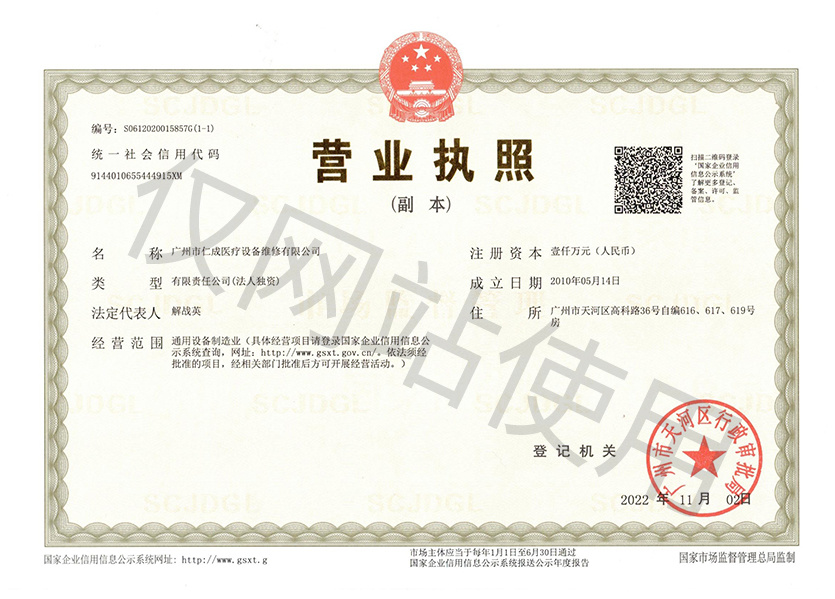
Copyright©2025 All Rights Reserved of Rencheng (Guangzhou) Medical Equipment Maintenance Co., Ltd.