Hot Searches: Color Doppler Ultrasound Probe Puncture Rack

Latest Products

History of Medical Ultrasound Development in China
Release time:
2025-03-12 09:39
From the first domestically produced monochrome ultrasound in China to the present, 40 years have passed. Chinese ultrasound Brands have been constantly catching up with the development path of imported enterprises, going through three stages: monochrome ultrasound, color ultrasound, and functional diagnosis. Although the technology of domestic Brands continues to improve and competitiveness is beginning to emerge, even today, there is still a certain gap with imported enterprises in high-end cardiovascular ultrasound and functional diagnosis. However, entering the "Artificial Intelligence + Ultrasound" stage, China has kept pace with the times in the development of artificial intelligence and policy support, and is expected to "overtake" imported Brands.

Phase 1 - Monochrome Ultrasound Era (1960s): Two-dimensional ultrasound image applications lasted for about 20 years, gradually developing from analog machines to digital machines. The launch of the first digital ultrasound in 2000 marked a new stage of development for the entire industry. Monochrome ultrasound gradually became popular, penetrating into hospitals at all levels and becoming one of the most widely used diagnostic instruments in clinical applications.
Phase 2 - Color Ultrasound Era (1980s): By adding Doppler technology to the two-dimensional ultrasound image, a blood flow image was formed. After imported enterprises entered China in 1985, they maintained a monopoly for 20 years. The launch of the first domestically developed color ultrasound by Mindray in 2004 marked the rise of domestic color ultrasound. At the same time, other enterprises improved the performance of domestic ultrasound through OEM or joint ventures, leading to booming industry development.
Phase 3 - Functional Diagnosis Era: The current stage of ultrasound development. From traditional morphological diagnosis, ultrasound technology has combined with other clinical technologies and applications to develop into functional diagnosis, such as auxiliary data analysis, elasticity imaging, single-point tracking, angiography, intravascular ultrasound, etc. Compared with imported products, domestic ultrasound Brands have reached the same level in morphological imaging, but there is still a certain gap in functional diagnosis, that is, in high-end color ultrasound machines.

History of the Development of Medical Ultrasound in China
For example, high-end cardiac color ultrasound integrates special analysis software, including myocardial motion and myocardial function decline analysis, on the basis of two-dimensional images and color blood flow information, rising from simple image diagnosis to functional diagnosis, assisting scientific research analysis, and favored by high-level hospitals, resulting in a qualitative leap in the industry. With the extended application of ultrasound technology, specific ultrasounds to meet different clinical needs are constantly emerging, such as intravascular ultrasound and ultrasound endoscopy, further enriching the application scenarios of ultrasound and entering the "+Ultrasound" stage.
Phase 4 - Artificial Intelligence + Ultrasound: Future development stage. Introducing artificial intelligence and cloud diagnosis into ultrasound dynamic screening has become a hot spot for industry research and development, hoping to solve the difficulties of a shortage of grassroots ultrasound doctors and uneven levels of ultrasound technology, and further expand the ultrasound market.

Evolution Path of Import Substitution in the Color Ultrasound Market
In 1983, SIUI Shantou Ultrasound developed the CTS-18 monochrome ultrasound, which was hailed as "China's B-ultrasound." In the same year, Wuxi Haiying, Mianyang Electronic Instrument Factory, Tianjin Medical Electronic Instrument Factory, Wuhan Electronic Instrument Factory, and others successively launched ultrasound products, occupying a place in the market.
In 1985, Chinese medical ultrasound entered the B-ultrasound era, and imported brands such as Aloka and Hitachi also just arrived in China. Domestic market competition at this time was mainly dominated by state-owned enterprises.
In 1995, Chinese medical ultrasound was still mainly monochrome ultrasound, and imported manufacturers and joint ventures began to occupy the main market share, with domestic enterprises surviving in the cracks, and many traditional ultrasound instrument factories declining and disappearing.
From 2004 to 2006, Mindray, founded by Mr. Yao Jinzhong, the "father of Chinese ultrasound," launched the first domestically produced color ultrasound in 2004, opening the road for import substitution of Chinese color ultrasound. Before this, the high-end market was absolutely monopolized by imported enterprises with a 95% market share, and the competitiveness of domestic products was generally weak.
From 2006 to 2012, a group of domestic enterprises such as Mindray, Mindray, Shantou Ultrasound, and TCL emerged, continuously launching more cost-effective ultrasound new products and seizing the mid-to-low-end market share, reducing the Price of ultrasound. At this time, the market share of imported enterprises such as GE fell to 90%.
From 2012 to 2016, Mindray, Mindray, and Shantou Ultrasound successively attacked the mid-to-high-end market and significantly reduced the Price of mid-to-high-end products, forcing imported Brands to defend the high-end ultrasound position. In terms of sales revenue, the market share of imported Brands was squeezed down to about 75%.
After 2017, the sales volume of domestic Brands has occupied the high ground, surpassing imported Brands. With the efforts of domestic high-end products, ultrasound sales revenue is also expected to break through, further realizing import substitution. Import substitution requires a process. According to the recollections of experts from the Chinese Society of Ultrasound Engineering, at the end of the 20th century, there was considerable policy and academic pressure when applying for the first domestic ultrasound Brand. Today, policies encouraging innovation in domestic medical devices and encouraging medical institutions to adopt "first-of-its-kind" policies are strongly promoting the development of domestic medical devices, and the import substitution process is accelerating.

Demand of Hospitals at Different Levels and Import Substitution Status
Import substitution has gradually moved upwards to tertiary and secondary hospitals. In first-level hospitals and primary hospitals, due to the implementation of tiered diagnosis and treatment policies, imported Brands no longer have a cost-effective advantage, and it is mainly the market expansion of domestic Brands. The demand for ultrasound equipment in secondary hospitals is mainly for general-purpose equipment, with professional equipment as a supplement. Domestic high-end models are expected to compete with imported Brands. Tertiary hospitals have a greater demand for high-end and professional ultrasound models, which is the main position of imported Brands. Domestic Brands are unlikely to replace professional products in the short term, while the updating of general-purpose products will be an opportunity for domestic Brands in tertiary hospitals. Obtaining a good reputation from high-level hospitals is also conducive to continuously opening up opportunities for ultrasound products in lower-level hospitals.

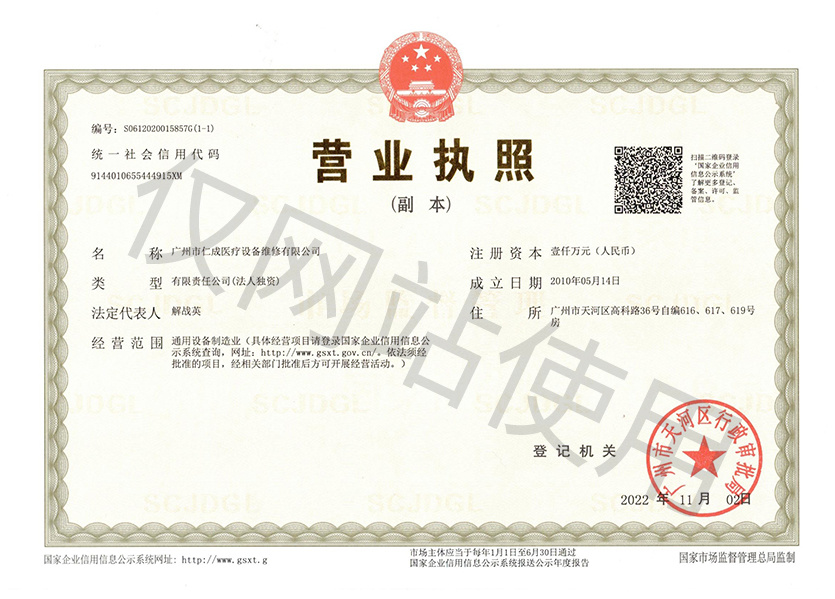
Development is increasingly rapid, convenient, and advanced. Advanced medical equipment facilitates diagnosis, and the application of ultrasound is inseparable from the ultrasound workstation. It benefits hospitals, doctors, and patients, enabling quick access to examination results, convenient film viewing, file viewing, saving, and archiving, and improving case query, statistics, and management functions. For patients, it allows for quick access to examination information, visualization of images and videos, enhanced communication with doctors, and sharing of examination results data, facilitating the review of files during referrals. Guangzhou Rencheng Medical has stood out with over ten years of experience in medical equipment repair, gaining a clear understanding of various needs through collaboration with hospitals. The developed imaging workstation effectively serves hospitals, doctors, and patients. Rencheng Imaging Workstation is now recruiting national agents and distributors, and provides 24-hour After-sale Service. Welcome to contact us anytime.
Contact Us
Room 618, 36 Gaoke Road, Tianhe District, Guangzhou, China
national unified free service hotline:400-020-6788


Copyright©2025 All Rights Reserved of Rencheng (Guangzhou) Medical Equipment Maintenance Co., Ltd.