Hot Searches: Color Doppler Ultrasound Probe Puncture Rack

Latest Products

Upgrades and replacements of ultrasound equipment (Rencheng Medical)
Release time:
2025-03-12 09:40
In the early days of ultrasound's emergence, the global scale of ultrasound equipment manufacturers was not large, and they only focused on ultrasound equipment, playing the role of early technology explorers. With the advancement of ultrasound technology and the continuous improvement of image quality, ultrasound imaging, as a real-time, non-radioactive examination method, has gradually been recognized by clinicians, and the demand for ultrasound equipment has been gradually released. The increase in the scale of the ultrasound market has attracted the attention of global medical giants, especially the attention of GPS, a global medical imaging giant whose core products are large-scale imaging (General Electric GE, Philips, Siemens).
Around 2000, the three giants of GPS used their scale advantages and industry status to aggressively expand their territories, carrying out a series of large-scale mergers and integrations of ultrasound imaging businesses. Since then, the three major imaging giants of GPS have all appeared on the scene, and the clinical application of ultrasound and the expansion of market scale have simultaneously entered a stage of rapid development.

Merger and Acquisition History of Ultrasound Companies Nationwide
The merger boom among foreign manufacturers occurred between 1998 and 2000. Many well-known foreign brands, after several rounds of mergers and acquisitions, have transferred and concentrated core technologies, giving these foreign manufacturers a stronger competitive advantage. Domestic ultrasound representative companies, such as Mindray and Edan, also absorbed and upgraded their technologies after acquisitions, leading to significant qualitative leaps in their products. However, this doesn't mean that all companies will complete technology transfer after mergers and acquisitions; successful integration depends on the company's basic conditions and whether it has R&D, production, and sales platforms.
Before 2000, the Chinese ultrasound market was almost entirely monopolized by imported brands. Only a few state-owned domestic ultrasound manufacturers, such as Shantou Ultrasound, Wuxi Haiying, and Sichuan Mianyang, could produce black and white ultrasound until Shenzhen Edan produced the first color ultrasound product in China in 2004. Following this, in 2006, Shenzhen Mindray, a leading domestic medical device company, produced its first color ultrasound product and has led the development of the domestic ultrasound industry for more than a decade since then.
After more than ten years of development, there are now thirty to forty domestic ultrasound manufacturers of varying sizes. Some well-known ones include Shenzhen Mindray, Shenzhen Edan, Shantou Ultrasound, Shenzhen Blue Rhine (formerly listed in Singapore), Suzhou Feinuo, Shenyang Dongsoft, Shenzhen EMP, and Shenzhen Huasheng. In the low-end market of townships and communities, domestic ultrasound brands have become mainstream.

History of Color Ultrasound Development in the Chinese Ultrasound Market
As Chinese national enterprises continue to challenge technology, imported brands have been unable to cope with the loss of market share in the low-to-mid-range market and have gradually focused on the high-end market, releasing more space. The effective space for domestic enterprises continues to expand, and as their scale increases, the overall strength of domestic enterprises continues to strengthen, forming a virtuous cycle of domestic substitution.
In the next ten years, the Price of high, medium, and low-end ultrasound will continue to fall, and technological barriers will be broken down. However, new entrants will lack scale advantages in the low-to-mid-range market and technological advantages in the high-end market. The tilt of talent, resources, and technology will cause the entire industry to enter a stage of oligopoly, which will be a time of abundant profits for domestic enterprises.
Of course, currently, we believe that domestic high-end ultrasound still has a significant gap compared to imported equipment. However, import substitution is a gradual process of penetration. The trend is such, only the length of the time span is uncertain, depending on the development of clinical medicine, the understanding and accumulation of needs, the development of supporting equipment and enterprises, industrial levels, and other factors. However, the speed of import substitution is accelerating; from the data of some sub-markets in the past, the trend is becoming increasingly clear.

Guangzhou Rencheng Medical Repair
With the increasing number of ultrasound devices, increasing complexity, and ever more comprehensive functions, the number of malfunctions is also increasing. With the rapid development of electronic science and technology, many maintenance engineers in hospital equipment departments can no longer fully repair hospital medical equipment independently. Therefore, the way of medical equipment maintenance has changed, leading to the rise of third-party medical equipment maintenance companies.
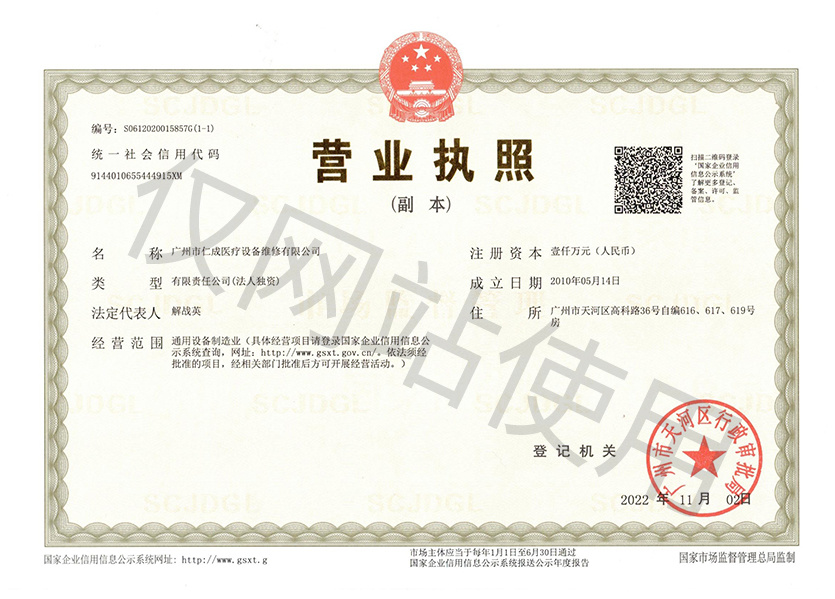
Among them, Guangzhou Rencheng Medical has stood out with more than ten years of experience in ultrasound repair, possessing solid electronic repair technology and striving for component-level repair and replacement of general components, reducing the cost of repair materials. Therefore, in the medical equipment repair industry, it is not only convenient, smooth, and mutually beneficial, but also cost-effective and mutually beneficial, bringing real benefits to hospitals. Since its establishment, we have served hundreds of hospital terminals and nearly 1,000 dealer customers nationwide.
This information belongs to Rencheng Medical. Please indicate the source when reprinting.
Contact Us
Room 618, 36 Gaoke Road, Tianhe District, Guangzhou, China
national unified free service hotline:400-020-6788


Copyright©2025 All Rights Reserved of Rencheng (Guangzhou) Medical Equipment Maintenance Co., Ltd.