Hot Searches: Color Doppler Ultrasound Probe Puncture Rack

Latest Products

The development of medical imaging technology in China in recent years (Rencheng Medical)
Release time:
2025-03-12 09:40
Medical imaging diagnosis is a significant component of the medical device market, and China is still experiencing an overall upward trend in the medical device industry. Medical imaging equipment constitutes the largest segment within China's medical device sector: Medical imaging is a crucial part of the medical device market. Globally, it ranks third, accounting for 12%; in China, it's the largest segment, representing 16%.

China's medical device industry growth rate far surpasses the global average, with the overall sector on an upward trajectory: Due to limitations in the level of productivity development, China's medical device industry had a relatively late start. In 2010, its overall scale was only US$17.9 billion. With the strengthening of the nation's overall strength and advancements in its industrial base, from 2010 to 2017, the compound annual growth rate of China's medical device market reached 19.8%, significantly higher than the global average of 3.4%. In 2018, the overall market size of China's medical devices reached US$75.7 billion.
The maturity of domestic medical imaging technology is primarily concentrated in the growth phase: According to surveys, among various advanced technologies in domestic medical imaging, except for PET technology, which is in the late infant stage, most are in the growth phase. Technologies such as 128-slice CT and below flat panel detectors and permanent magnet MRI are gradually moving towards maturity.

Aging population will drive the overall development of the medical imaging industry in the long term: In 2018, the proportion of people aged 60 and above in China reached 17.9%; the reinvestment of medical resources driven by an aging population will present a long-term market opportunity.
Because our country prioritizes the medical environment, leading to a series of convenient conditions, the nationwide popularization of medical insurance and rural cooperative medical schemes is gradually changing the reluctance of most low-income people to seek medical care, increasing the willingness of low-income individuals to seek medical attention when ill. This has, to some extent, increased outpatient visits in townships, communities, and county-level hospitals, which are major clients for domestically produced medical devices.

Along with aging and urbanization, the social and economic transformation process has led to rapid growth and diversification of residents' basic health needs, posing challenges to the establishment and improvement of the basic medical and health service system. Against this backdrop, the 18th National Congress of the Communist Party of China further proposed the requirement to rationally allocate medical resources and establish a tiered medical service system, pointing out the direction for the reform of the medical and health service system and the basic medical security system. This is an important part of deepening medical reform in the new era, aiming to achieve universal access to basic medical and health services. The establishment of a tiered diagnosis and treatment system aims to reverse the current unreasonable allocation of medical resources and solve the problem of unbalanced resource distribution. It focuses on the construction of an urban-rural coordinated medical and health service network, relying on extensive hospitals and primary-level medical and health institutions, exploring a medical and health service system framework that rationally allocates resources, effectively activates existing resources, and improves the efficiency of resource allocation and utilization.
Tiered diagnosis and treatment will bring an increase in the market for some medical imaging equipment. Taking color ultrasound as an example, the incremental market at the primary level is expected to reach 30,000 units, with a total value exceeding 70 billion yuan.

China's medical environment is constantly improving, in line with national conditions and serving the people. With the medical environment becoming increasingly better, and imaging equipment becoming more complex and functional, medical treatment is more convenient. Correspondingly, equipment failures have become increasingly diverse. Therefore, the approach to medical equipment maintenance has changed, leading to the rise of third-party medical equipment repair companies.

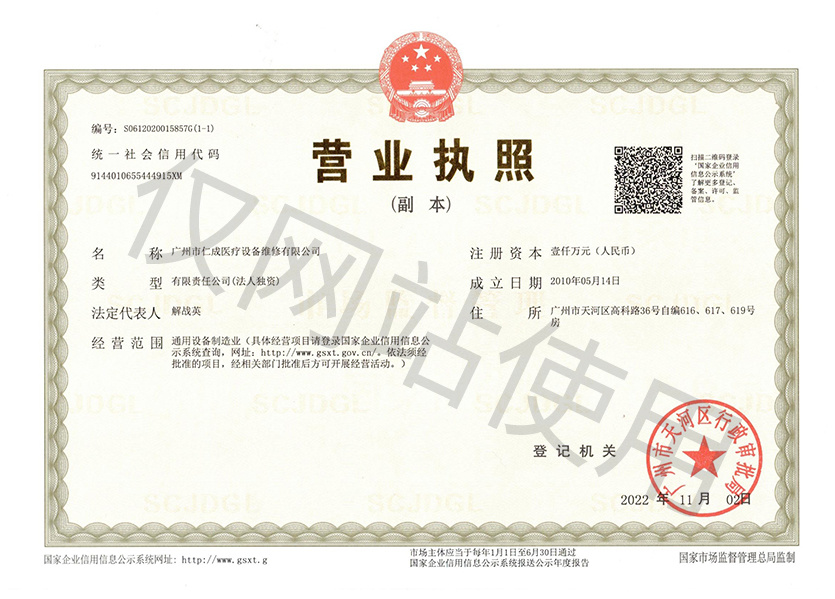
Among them, Guangzhou Rencheng Medical has stood out with over ten years of experience in medical equipment repair, possessing strong electronic repair technologies, striving for component-level repair and the replacement of common components, reducing maintenance material costs. Therefore, in the medical equipment repair industry, it offers convenience and cost-effectiveness, bringing tangible benefits to hospitals. Since its establishment, it has served hundreds of hospital terminals and nearly 1,000 dealer clients nationwide.
Contact Us
Room 618, 36 Gaoke Road, Tianhe District, Guangzhou, China
national unified free service hotline:400-020-6788


Copyright©2025 All Rights Reserved of Rencheng (Guangzhou) Medical Equipment Maintenance Co., Ltd.