Hot Searches: Color Doppler Ultrasound Probe Puncture Rack

Latest Products

Medical device representative, we need you
Release time:
2025-03-12 09:42
If 2009's“Deepening medical reform”was still a baby in swaddling clothes, then ten years later,2019year“Deepening medical reform”is like the spring in Zhu Ziqing's writing, opening its eyes happily and running, and every inch of land where sunlight passes continues the four seasons of prosperity, decline, and decay.
But when it trembles slightly, it completely changes our original lives, just like the volume-based procurement "earthquake”The collapse of medicines, irreversible consistency evaluation, disappearing pharmaceutical companies and representatives.
▍Is the pharmaceutical industry still worth doing?
Current Situation:In the past 40 years, the pharmaceutical industry has grown from1978year's national industrial total output value of72.8yuan to2017year's nearly30000yuan, an increase of412times.
Over the past 40 years, it has maintained an average annual growth rate of double digits, while in the past30years, it has consistently maintained an average15-20%or more growth rate. As an important part of the national economy, the industry's growth rate has consistently been higher than the gross domestic product, both during periods of economic downturn and during the intensive medical reform period.
Trend:In 2025, China will have60people over the age of20%years old, accounting for more than
of the total population. Population aging will lead to a huge expansion of the chronic disease medical market.
Upgrades in diagnosis and treatment and improvements in people's health needs, while continuously increasing the consumption of medical insurance funds, will also continue to bring incremental growth to the pharmaceutical market.6.2%; among them, the revenue growth rate of the pharmaceutical manufacturing industry was8.4%. The pharmaceutical industry remains a high-growth industry, and it is still the fastest-growing industry in the national economy.2020year was China's moderately prosperous year, with per capitaGDPfrom1978year's156dollars, to over1ten thousand dollars. People's yearning for life and health will become increasingly higher.
▍Will pharmaceutical representatives disappear?
Current Situation:Along with China's rapid economic growth for more than 30 years, China's pharmaceutical market has experienced almost barbaric, frantic growth. In this, pharmaceutical representatives“have made significant contributions.”
The earliest batch of joint ventures in China, such as Otsuka, Bristol Myers Squibb, Warner Lambert, Xi'an Janssen, and Suzhou Capsule, began to be established—at that time there were only hundreds of pharmaceutical representatives, but now the number has risen to two or three million.
The first batch of pharmaceutical representatives have made a successful transformation. Even though the state has recognized the profession of pharmaceutical representative in recent years, few people dare to say, "I'm a pharmaceutical representative."
The reason is that a portion of pharmaceutical representatives have tarnished this sacred and noble profession. Most of them do not understand academic marketing; they only focus on points and maintaining relationships. With volume-based procurement,DRGsconsistency evaluation, key catalog monitoring, and medical insurance negotiations, the survival space of pharmaceutical representatives is becoming increasingly narrow—many people are beginning to fall into deep thought and confusion.
Trend:Pharmaceutical representatives will not disappear. The career of any person involves an embryonic stage, a development stage, a mature stage, and a demise stage.
We should experience the transition from the development stage to the mature stage and embrace and adapt to changes in the industry. Although the dividend of industry growth is gradually disappearing, the impact of industry changes is huge. However, challenges and opportunities coexist; while the industry is accelerating the elimination of excess production capacity, many new opportunities will also emerge.
For example, a large number of emerging companies are emerging, and a large number of new products are entering the market; they also need a large number of marketing personnel. We should think about how to become a respected pharmaceutical representative, how to become a pharmaceutical representative who brings benefits to patients, and how to become an upgraded version of a pharmaceutical representative.
The pharmaceutical industry will remain a sunrise industry; the pharmaceutical industry will remain an industry with growth exceeding GDP. However, pharmaceutical representatives need a comprehensive upgrade. Please believe that starting now is the best choice.
▍Where is the pharmaceutical industry headed?
Current Situation:As of 2017, China still had7000pharmaceutical companies, but the top 100 pharmaceutical companies in the country accounted for60~70%。
of the total output value of the pharmaceutical industry. The remaining thousands of enterprises need to40%fight for market share in a red ocean. The polarization of pharmaceutical companies is serious, and the concentration of enterprises is further strengthening; the strong remain strong, and the weak become weaker.
For a long time, China's pharmaceutical market70%market share has been dominated by generic drug companies, which fully illustrates China's pharmaceutical companies' weak capacity for independent innovation. If consistency evaluation is like a slap that wakes up pharmaceutical companies still dreaming sweet dreams, then subsequent volume-based procurement really makes pharmaceutical entrepreneurs unable to sleep peacefully.
In the past2019This year is a year of intensive industry policies and a year of significant differentiation in the history of the pharmaceutical industry. It can be said to be the end of an era, but also the beginning of a new one. The state has designed the development direction of the entire pharmaceutical industry from the top level, which will inevitably subvert the survival space of pharmaceutical enterprises.
Trends:Only pharmaceutical companies that follow national policies have a future. It's time for industrial upgrading, it's time to embrace the state's support.
How to embrace? Innovation seems to be the only choice right now. Leaders who truly want to lead pharmaceutical companies forward should abandon the countless benefits and illusions brought by past development. There are no so-called large varieties, no so-called auxiliary drugs, no so-called high rebates, no so-called high billing, no so-called good products. These have all become things of the past and relative.
Only when you are grounded can you know you are alive. The thrill of floating in the air is always temporary.
Those who have the conditions to conduct a one-time evaluation of generic drugs should seize the time to do so. Those who can profit from volume-based procurement should do everything to enter. Those who have the ability to do business with the state and enter medical insurance negotiations should not hesitate. Those with financial resources, capabilities, and good targets or products should continue to develop... If none of these are present, it's best to sell at a good Price.
The Art of War says that retreat is the best strategy. The products produced by pharmaceutical companies should truly benefit the public.
▍Discussion on the Value of Doctors
Current Situation:Trudeau has a famous saying :“Sometimes, to cure; often, to help; always, to comfort.”}, {”
The murder case at the Civil Aviation Hospital at the end of last year once again caused a sensation in society regarding the medical profession. "Guo Yu·Jin Yu 8":“Wen Zi said:'Does medicine reach the state?'In reply:'The best doctors treat the nation; the next best treat the sick; the lowest treat officials.”
This shows that we, from the nation down to individuals, cannot do without doctors. Doctors are such a noble group of professionals. They can avert harm for the nation and treat diseases for patients.
Doctors work long hours, have low incomes, spend little time with their families, and experience tense doctor-patient relationships. One word vividly describes the current state of doctors: occupational burnout, which refers to the "exhaustion state" experienced by individuals under work pressure.
Studies show that the "occupational burnout rate" of Chinese doctors is as high as 66.5~76.9%.
Trends:At the end of last year, the "Basic Law of Medical and Health Services and Health Promotion" was passed, marking China's first basic and comprehensive law in the field of health.
The law clearly stipulates that the whole society should care for and respect medical and health personnel, maintain a safe and orderly medical and health service, and jointly build a harmonious doctor-patient relationship. It prohibits any organization or individual from threatening or harming the personal safety of medical and health personnel and infringing on their dignity.
For a long time, due to the reality of "medicine for medicine," the actual social value of doctors has not been recognized as it has been in other countries. Now, the state is legislating at the medical level, implementing volume-based procurement at the pharmaceutical level, implementing DRGs at the medical insurance payment level, and reforming performance at the hospital level. On the one hand, it breaks the mechanism of "medicine for medicine," and on the other hand, it gradually improves the value of doctors in terms of salary reform.
I believe this will take time, but I also believe in the government's strength and efficiency. The value of doctors is returning.
▍Patient Benefits
Current Situation:Can you imagine the pain in a patient's heart? "Doctor, you are only observing, but I am experiencing it.”I believe this is the true expression of most patients.
Finding the right doctor for a serious illness is difficult. To get into the big cities, patients stay up all night to try and make appointments, only to have to buy appointments from scalpers at high Prices. When they finally see a doctor, the appointment is rushed and only a few minutes long. The patient feels extremely unbalanced, suspicious of the expert's words, sleeps in small hotels or hallways, and after surgery, leaves the hospital quickly and keeps running back and forth for follow-up rehabilitation. Looking at the high Price of anti-cancer drugs and giving up treatment, the helplessness and despair towards life... I firmly believe that this is still a true portrayal of most patients.
Trends:The thorough reform of the supply side makes patients the most direct beneficiaries of the deepening medical reform. Undoubtedly, this is wise.
In the first half of 2017, the country negotiated for the first time on the access to the medical insurance drug list,44of the proposed negotiated drugs,36were successfully negotiated and included in the category B of the drug list. Half of them (18types) were anti-tumor drugs, including15types of Western medicines and3types of traditional Chinese medicines. Compared with the average retail Price in2016year, the average Price reduction of negotiated drugs reached44%and the highest reached70%。
2018At the beginning of the year, the state first established an organization for patients—the National Healthcare Security Administration, which obviously strengthened the payer's voice; then reduced the import tariffs on anti-cancer drugs to zero, and demanded to increase the financial subsidies for basic medical insurance, urged to accelerate the Price reduction of anti-cancer drugs, etc.; then, it implemented medical insurance access negotiations for anti-cancer drugs that were not included in medical insurance.10In the month of17types of anti-cancer drugs were included in medical insurance, with an average Price reduction of56.7%and can be reimbursed50-90%This once gave many cancer patients who could not afford medicine hope for long-term survival.
After all, the grand strategy of a healthy China lies in people—in the past2019years, with the continued penetration of volume-based procurement, drug Prices have further decreased; in the future, withDRgsWith its advancement, patients will only benefit more and more.
The chairman once said that we should always take people's yearning for a better life as our goal. At present, people's main demands are to reduce treatment costs and improve the accessibility of new drugs. From the national, researcher, and pharmaceutical company levels, everyone is working together towards this goal.
Needs, medicine, representatives, country, doctors, patients, medical insurance, industry, medicine, pharmaceutical companies
Contact Us
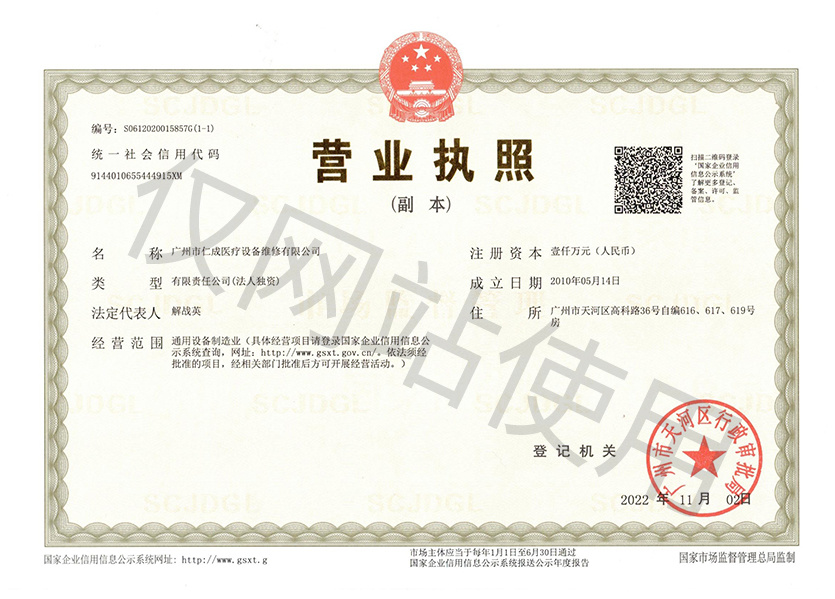
Room 618, 36 Gaoke Road, Tianhe District, Guangzhou, China
national unified free service hotline:400-020-6788


Copyright©2025 All Rights Reserved of Rencheng (Guangzhou) Medical Equipment Maintenance Co., Ltd.