Hot Searches: Color Doppler Ultrasound Probe Puncture Rack

Latest Products

This plan injects new vitality and impetus into Yunnan Province's medical device industry
Release time:
2025-03-12 09:42
On December 20, the "Yunnan Province Medical Device Registrant System Pilot Implementation Plan" (hereinafter referred to as the "Plan"), formulated by the Yunnan Provincial Drug Supervision and Administration Bureau, will be officially implemented. The release of the Plan is an important measure to optimize the allocation of medical device resources in Yunnan Province, further unleash the vitality of the industry, accelerate the construction of the China (Yunnan) Pilot Free Trade Zone, and promote the innovative development of Yunnan Province's medical device industry.
Why was the Plan introduced?
Hu Yu, Deputy Director of the Provincial Drug Administration Bureau, introduced that the medical device registrant system is a system in which the applicant for medical device registration submits an application for market approval of medical devices, the sample is entrusted to a commissioned production enterprise for production, and after obtaining the medical device registration certificate, becomes the medical device registrant (hereinafter referred to as the registrant). The registrant produces products independently or entrusts a commissioned production enterprise to produce products, lists them under the name of the registrant, and assumes corresponding legal responsibilities for the product quality throughout the life cycle of the medical device. Currently, China's existing medical device registration and production management is a one-to-one management model of the same entity, that is, when an enterprise handles a registration certificate, it must establish its own production facilities and equipment and quality management system, produce samples, and then apply for registration. After obtaining the registration certificate, it can then apply for a production license before its products can be marketed.
In 2018, with the approval of the National Medical Products Administration, Shanghai, Guangdong, and Tianjin successively launched pilot programs for the medical device registrant system in the free trade zones. By July 2018, Shanghai expanded the pilot program from the free trade zone to the entire city. In August 2019, based on the experience of the above-mentioned pilot areas, the National Medical Products Administration issued the "Notice on Expanding the Pilot Program for the Medical Device Registrant System", including Yunnan Province among the 21 provinces and cities included in the pilot program.
In order to fully implement the relevant spirit and requirements of the state on the medical device registrant system, and in conjunction with the spirit of the "Overall Plan for Six Newly Established Pilot Free Trade Zones" issued by the State Council in August 2019, the Provincial Drug Administration Bureau, through research and demonstration, formulated and issued the Plan.
What are the main points of the Plan?
Hu Yu introduced that the Plan mainly includes nine aspects: overall goals of the pilot program, basic principles, pilot content, product scope, application conditions, obligations and responsibilities, procedures, supervision and management, and others.
The Plan focuses on encouraging medical device innovation and optimizing resource allocation, promoting cross-regional industrial chain development, implementing the legal responsibility of the registrant for the entire life cycle of registered products, improving the mid-and-post-event supervision system, exploring new models for medical device review and approval and commissioned production management, exploring the establishment of a collaborative development mechanism for medical device supervision, and building a cross-regional collaborative supervision framework for medical devices.
The Plan clarifies that the pilot work shall be carried out and implemented in accordance with the principles of legality and compliance, orderly progress, reform and innovation, controllable risks, clear responsibilities and rights, and coordination and cooperation. In accordance with the basic requirements of the documents of the National Medical Products Administration, adhering to innovative thinking and pioneering initiatives, the specific content of the pilot implementation of the registrant system in Yunnan Province is clarified and refined.
The Plan clarifies that enterprises and research institutions whose registered Address or production Address is located in Yunnan Province can entrust enterprises within the province or other pilot provinces with corresponding production capacity to produce samples for registration and apply for registration. After obtaining the medical device registration certificate, they can produce independently or entrust other enterprises with production capacity to produce products for market listing. At the same time, entrusted production enterprises that do not have production qualifications can submit the medical device registration certificate of the registrant to apply for a production license; those that have already obtained the corresponding production qualifications can directly handle the production license change procedures. After obtaining the corresponding production scope and variety qualifications for medical devices, the registrant or entrusted enterprise can carry out the production of products for market listing and list them under the name of the registrant. The registrant may entrust one or more enterprises to produce products for market listing at the same time. The registrant can sell independently or entrust the sale of medical devices. The Plan emphasizes that the registrant bears corresponding legal responsibilities for the product quality throughout the life cycle of medical devices, including design and development, clinical trials, production, sales and distribution, after-sales service, product recall, adverse event monitoring and re-evaluation. The obligations and responsibilities of the registrant, entrusted enterprises, and enterprises, institutions, and individuals entrusted by the registrant to carry out research and development, clinical trials, and sales and distribution are also clarified.
The Plan specifies that the pilot products are Class II and Class III medical devices within the country (including innovative medical devices). Products listed in the catalogue of medical devices prohibited from being entrusted for production issued by the former State Food and Drug Administration, such as vascular stents and artificial heart valves, as well as Class I medical devices within the country, are not included in the pilot scope of the Plan. Currently, medical device manufacturing enterprises in the province that have obtained medical device registration certificates and medical device production licenses can apply to become registrants in accordance with the provisions of the Plan and produce products for market listing independently or by entrusting others.
The Plan simplifies the procedures for registrants and entrusted enterprises to apply for registration and production licenses, following the principle of simplifying wherever possible, merging wherever possible, and optimizing wherever possible, based on the existing procedures and requirements for materials, only adding necessary verification procedures and evidence materials. In terms of supervision and management of the pilot program for the registrant system, in accordance with the principle of "who issues the certificate, who supervises", the responsibilities of supervision are divided according to the jurisdiction of the registrant and the location of the entrusted production. The provincial drug supervision and administration departments will work together to conduct supervision and management of registrants and entrusted production enterprises. For products produced by registrants in Yunnan Province that entrust entrusted production enterprises in other pilot regions, the Provincial Drug Administration Bureau may conduct extended inspections or entrust inspections.
What are the characteristics of the Plan?
It is understood that the Plan has three main characteristics:
First, in terms of medical device innovation, the Plan encourages scientific research units and scientific research enterprises to focus on research and development, and through commissioned production, to bring products to market, without having to transfer research and development results as in the past, forming a "selling seedlings" pattern, so as to improve the gold content of research and development technology.
Second, in terms of the medical device industry, the Plan allows registrants to entrust cross-provincial commissioned production of samples and products in pilot provinces, making mergers and acquisitions and reorganizations of enterprises more flexible, cooperation models more diverse, and medical device production can be entrusted to specialized "OEM enterprises" for mass production, greatly improving the output quantity and quality of medical devices.
Third, in terms of medical device supervision, the current situation of "localized" medical device product registration and production licenses will be broken, and the cross-regional supervision information sharing and supervision cooperation model of "variety belongs to the person, production belongs to the place" will become the mainstream.
How will the Plan be publicized and implemented?
China classifies medical devices according to their risk levels. Class I medical devices are low-risk medical devices that can be ensured to be safe and effective through routine management, such as stethoscopes commonly used by doctors and cooling patches commonly available at home. Class II medical devices are those with moderate risk, requiring strict control to ensure their safety and effectiveness, such as dentures and physical therapy instruments that we commonly call. Class III medical devices are those with high risk, requiring special measures to strictly control their management to ensure their safety and effectiveness, such as pacemakers, intraocular lenses, and infusion sets.
As of December 15, 2019, there were a total of 102 medical device manufacturing enterprises in Yunnan Province, including 20 Class I, 78 Class II, and 4 Class III. There are 376 valid medical device registration certificates, including 363 Class II and 13 Class III. There are 178 Class I product filings.
Regarding the promotion and implementation of the "Scheme," the Provincial Drug Administration Bureau proposes the following: First, release guidelines on the registrant's quality management system and the preparation of entrusted quality agreements, etc., to improve relevant supporting mechanisms and systems, helping registrants and entrusted enterprises to establish and standardize their quality management systems as soon as possible, ensuring the quality of products under the registrant system pilot program. Second, strengthen publicity and training on the medical device registrant system pilot policy, organizing relevant enterprises and research institutions, especially those within the China (Yunnan) Pilot Free Trade Zone, for publicity and training, to improve public understanding and awareness of the registrant system pilot program. Third, strengthen guidance and services for medical device registrant system pilot projects, assigning dedicated personnel to provide full-cycle tracking and guidance services, ensuring early intervention and effective service to accelerate and improve the implementation of the registrant system pilot projects. Fourth, based on the specific project implementation of the registrant system pilot program, establish a regular communication system and risk consultation system for regulatory information with other pilot provinces and regions, sharing regulatory information and promptly transferring problem leads to ensure that regulatory responsibilities are implemented.
Scheme, medical devices, registration, production, enterprise, pilot program, product, system, entrustment
Contact Us
Room 618, 36 Gaoke Road, Tianhe District, Guangzhou, China
national unified free service hotline:400-020-6788


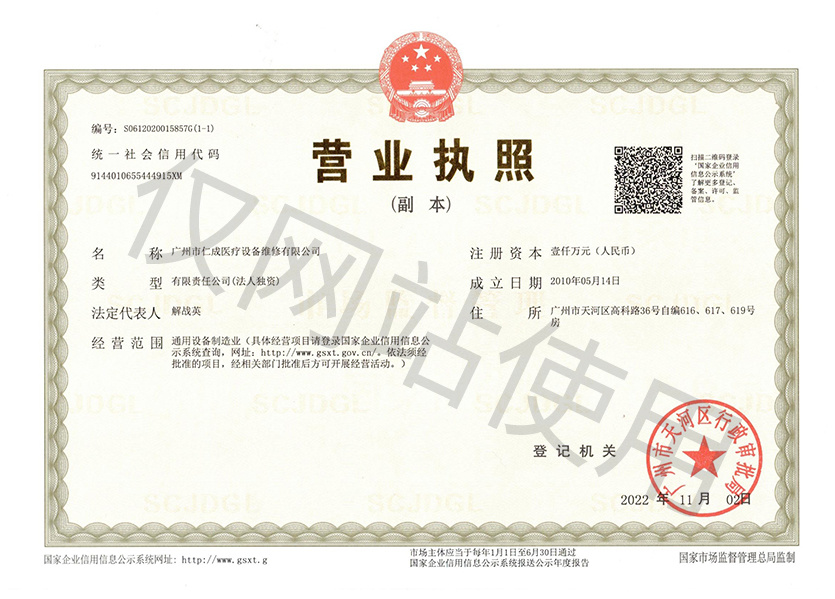
Copyright©2025 All Rights Reserved of Rencheng (Guangzhou) Medical Equipment Maintenance Co., Ltd.